
How Homesteaders Built Berthoud Colorado
How the Homestead Act shaped the land, early farms, and the community that would become Berthoud
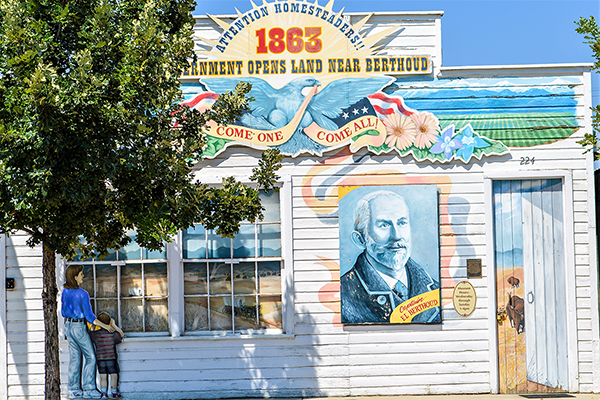
Berthoud Pioneer Museum - Homesteading - Photo by May Albrecht
Long before Berthoud became known for its welcoming small-town atmosphere, historic downtown, and neighborhoods like Harvest, the land surrounding the town was defined by something much simpler. It was farmland. Wide open prairie stretched across the plains of Northern Colorado, and the people who settled here came not for convenience or development, but for the chance to build a life through hard work and perseverance.
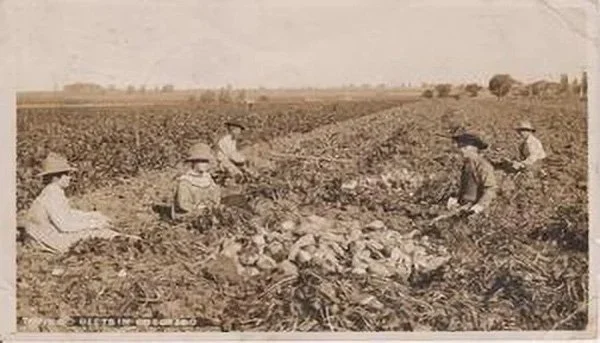
Sugar Beet Toppers - Photo Courtesy Berthoud Historical Society - Agriculture
Much of Berthoud’s early story begins with the Homestead Act of 1862, one of the most influential laws in the settlement of the American West. The act allowed individuals and families to claim up to 160 acres of public land. In exchange, they were required to build a home, cultivate the land, and live there for at least five years. If those conditions were met, the land officially became theirs.
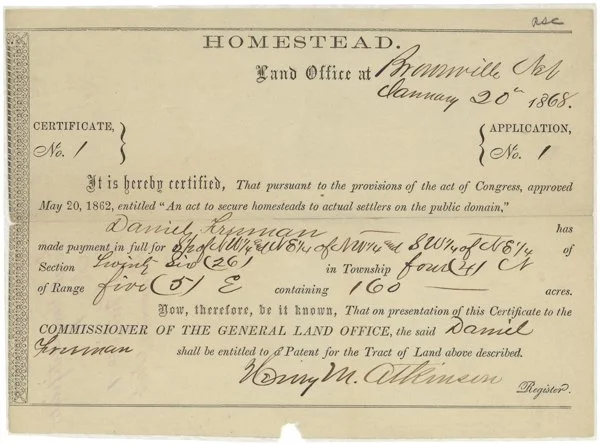
Homestead Certificate - Courtesy U.S. National Archives, Records of the General Land Office.
For many families, the Homestead Act represented an extraordinary opportunity. Land ownership was out of reach for most working people in the eastern United States, but the western territories offered space, independence, and the possibility of building something that could last for generations.
Northern Colorado quickly became one of the places where those opportunities took root.
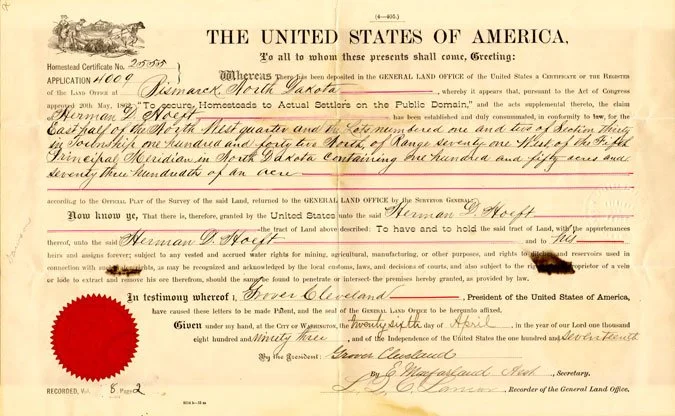
Homestead Certificate - Courtesy Bureau of Land Management, General Land Office Records.
The Landscape That Drew Settlers
When homesteaders began arriving in the late nineteenth century, they found a landscape that held promise despite its challenges. The plains were open and fertile, but rainfall alone could not reliably support crops. What made the region viable for agriculture was the presence of the Little Thompson River, which flows from the foothills west of Berthoud and across the plains.
Settlers quickly recognized the importance of water. Many of the earliest farms and homesteads were established along the river valley and nearby land where irrigation could eventually be developed.
Crops such as wheat, corn, and alfalfa became common across the plains, while livestock operations expanded across open grazing land. What had once been prairie gradually became a working agricultural landscape marked by barns, windmills, and fields that changed color with the seasons.
These farms formed the foundation of what would eventually become the Berthoud community.

Stumpf family irrigating crops near Berthoud, Colorado.
Photo Courtesy Berthoud Historical Society History of Agriculture
Irrigation and the Growth of Farming
While the Homestead Act made land available, successful farming in Northern Colorado depended on something more, reliable water management.
Early settlers soon realized that rainfall alone was not enough to sustain crops through the region’s dry summers. Farmers began working together to construct irrigation ditches that carried water from the Little Thompson River across their fields. These irrigation systems allowed crops to grow more consistently and helped transform the surrounding plains into productive farmland.
Over time, irrigation became central to agriculture throughout the region. Fields of hay and alfalfa supported livestock operations, while grain crops helped sustain local farming families. These agricultural systems shaped the landscape that still defines the area around Berthoud today.
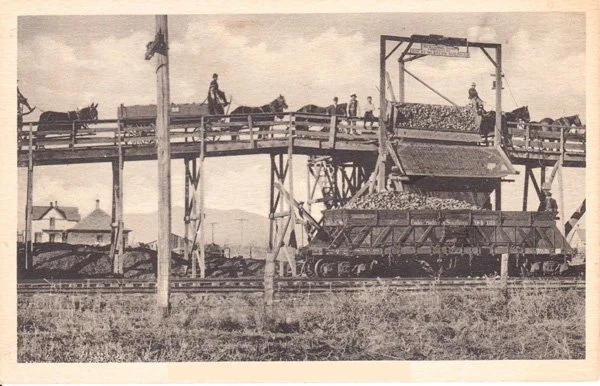
Sugar Beet Dump - Photo Courtesy Berthoud Historical Society
Sugar Beets and Berthoud’s Agricultural Boom
By the early twentieth century, another crop began to play a major role in Northern Colorado agriculture: sugar beets.
Sugar beet farming expanded across Larimer County as processing factories opened throughout the region. The crop required significant labor but proved highly productive in irrigated fields. Many farms around Berthoud began growing beets alongside traditional crops such as alfalfa and grains.
Sugar beet farming helped strengthen the local agricultural economy and brought seasonal workers to the area during harvest periods. It also contributed to the agricultural identity that Berthoud carried well into the twentieth century.
Fields of sugar beets, hay, and grain became a familiar sight across the plains surrounding the town.
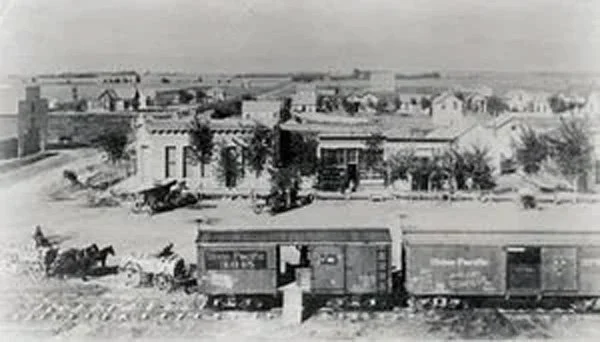
Berthoud Railroad - Photo Courtesy Berthoud Historical Society
When Berthoud Moved to Its Present Location
One of the most unusual chapters in Berthoud’s history is that the town did not originally sit where it does today.
The earliest settlement developed closer to the Little Thompson River valley, near many of the early farms that depended on the river for irrigation and water. But when the railroad expanded through Northern Colorado in the late 1800s, engineers chose a route slightly east on higher, more level ground.
The valley location made it difficult for trains to stop and then climb back out with heavy loads, so the rail line bypassed the original settlement. Because railroad access was essential for transporting crops and supplies, the center of town gradually shifted toward the tracks.
Over time, businesses, homes, and community buildings relocated approximately 1.6 miles east, establishing the town center that exists today.
In some cases, buildings were not rebuilt but physically moved to the new location. Structures were placed on rollers or wagons and slowly transported across the prairie to be reassembled near the railroad. Some homes in Berthoud today still carry stories of having been moved during this period of transition.
The shift illustrates how closely the town’s development was tied to agriculture and transportation during the homesteading era.
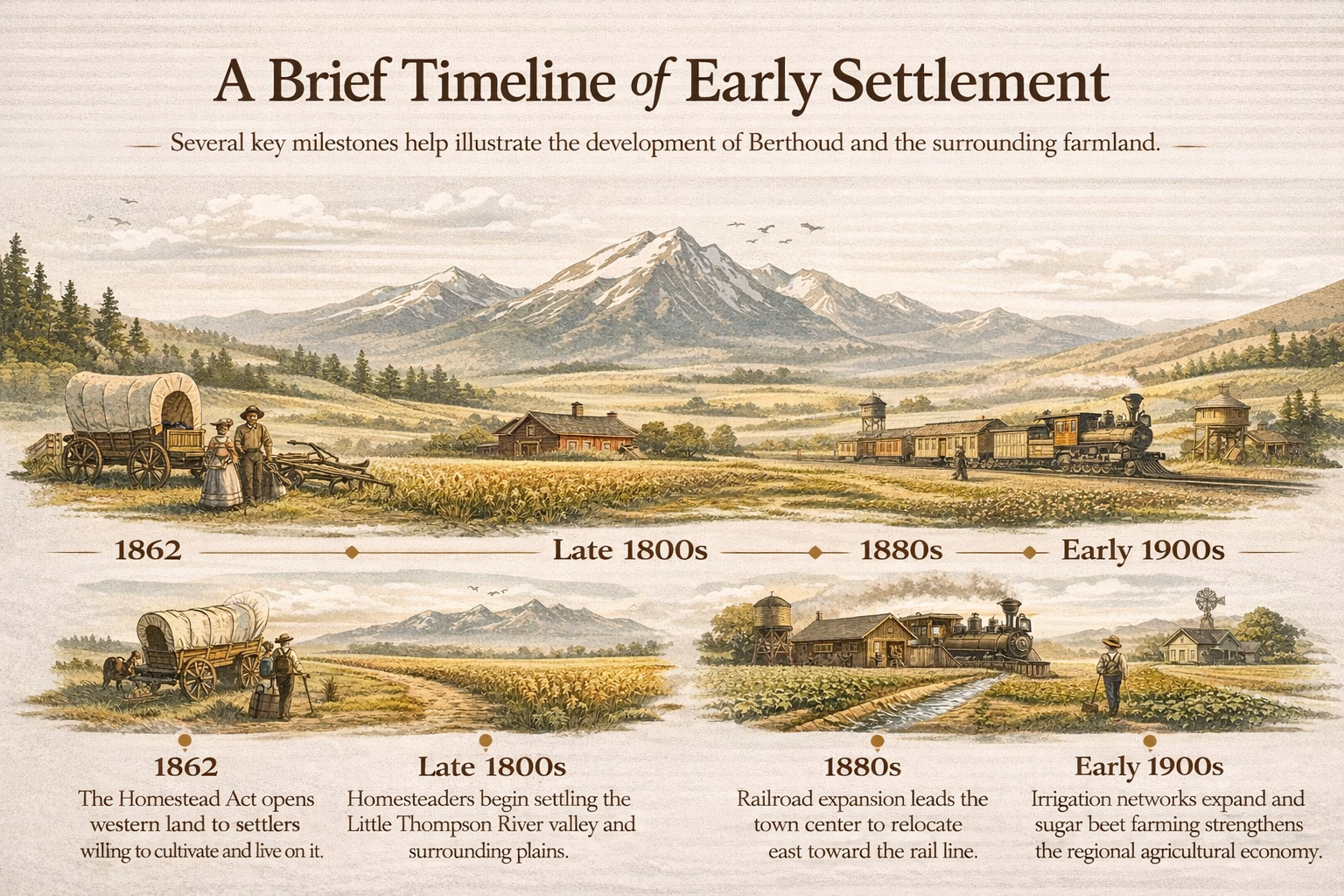
Through each stage of growth, the land remained the common thread connecting the people who lived and worked here.
Preserving Berthoud’s History
Much of Berthoud’s agricultural history has been preserved through the efforts of local historians and community organizations. The Berthoud Historical Society, which operates the Little Thompson Valley Pioneer Museum, continues to share the stories of the region’s early settlers and farming families. Christine Torres is the new president of the Historical Society and would be happy to give you a tour or the museum or the McCarty Fickle home. Call 720-320-1405
Through exhibits, community events, and historical archives, the society helps residents and visitors better understand how homesteading shaped the development of the town.
Local historian Mark French, who served as Berthoud’s town historian and President of the Historical Society for many years, also documented much of the community’s early agricultural history. Through research and articles published in the Berthoud Weekly Surveyor, French helped preserve the stories of the farms and families who helped build the town.
These efforts ensure that the legacy of Berthoud’s homesteaders remains part of the community’s identity today.
Check out one of Mark French’s book, Berthoud, From River Bottom to Bluff. Delve into the Fascinating History of Berthoud, Colorado
From Homesteads to Modern Communities
For much of the twentieth century, the land surrounding Berthoud remained primarily agricultural. Many farms established during the homesteading era were passed down through generations of families who continued to cultivate the same fields their ancestors once claimed.
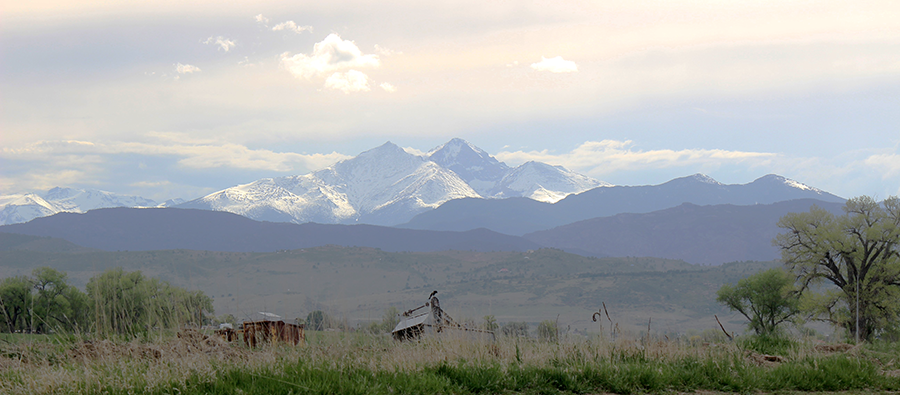
View from Harvest - Photo Christine Torres
As Northern Colorado has grown in recent decades, some of these historic agricultural properties have gradually transitioned into residential communities. While the landscape has evolved, the connection to the region’s farming heritage remains an important part of the area’s identity.
Communities like Harvest, located near the edge of Berthoud, reflect that connection. The land that now includes homes, walking paths, and neighborhood spaces was once part of the agricultural landscape that defined the region for more than a century.
The name Harvest itself acknowledges that history, referencing the fields that once produced crops and the families who worked the land.
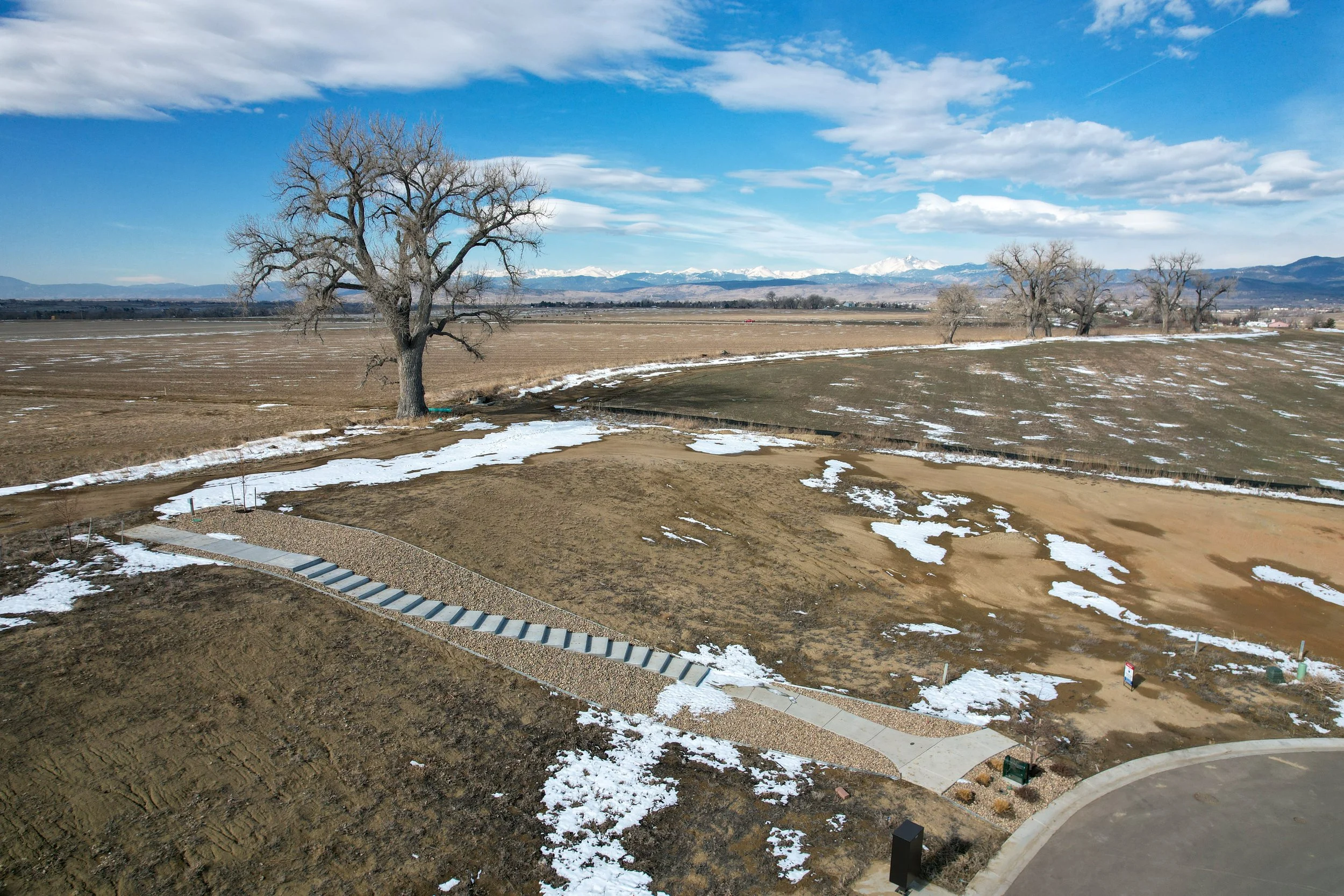
From Field to Harvest - Photo Western Exposures Photography
A Legacy That Still Shapes Berthoud
The story of homesteading in Berthoud is ultimately a story about people. Early settlers believed in the potential of the land and were willing to commit their lives to building something lasting.
They established farms where none existed before, developed irrigation systems that made agriculture possible, and formed the first communities that would eventually grow into the town of Berthoud.
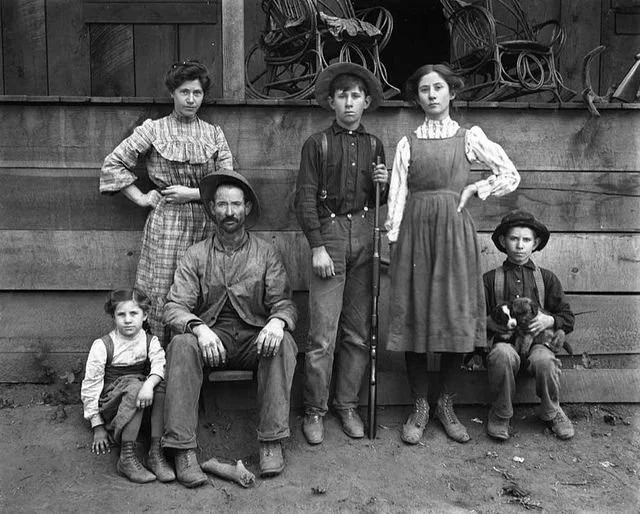
Homesteader Family on their Farm - Photo Courtesy Library of Congress, Prints and Photographs Division
Today, the landscape continues to evolve, but the influence of those early homesteaders remains visible. Open farmland still surrounds the town, agricultural traditions are remembered through local history, and the connection between people and land continues to shape how Berthoud grows.
For those who live here, and for those considering making Berthoud home, understanding this history brings a deeper appreciation for the land and the community that grew from it. What began with homesteaders carving farms from the prairie gradually became a town shaped by agriculture, perseverance, and a deep connection to the landscape.
As this land enters a new chapter, Alex with HT Land Partners chose to honor the Johnson family homesteaders who once farmed this land by naming the streets in Harvest after them. It is a small but meaningful tribute that reflects a continued respect for the land and the legacy of the farming families who helped shape the Berthoud community.